Hollywood Burbank Airport's New Terminal Digital Signage Proves the Power of Content Strategy

The wait is over: Hollywood Burbank Airport's new passenger terminal opened today.
BUR's new 355,000 square foot, 14-gate passenger terminal replaces facilities that served Southern California for nearly a century. The nearly $1.3 billion, once-in-a-century project brings modern amenities, expanded passenger spaces, enhanced safety and accessibility, and a uniquely Burbank experience to a new generation of travelers.
Today, we're going behind the scenes to explore Burbank's shift from conventional information displays to a connected passenger communication strategy and program.
Thinking Beyond FIDS
Early plans for the new terminal called for a traditional flight information display system (FIDS).
But as BUR and Burns Engineering came close to the end of the design process, they asked an important question: what if the same investment could do more than simply display flights?
The Guaranteed Maximum Price was set, and plans were nearly complete. The challenge was to make the most of their budget without changing the project schedule. Working with Synect, the team evaluated how a content strategy and digital content management system (DCMS) could meet the project's operational requirements while creating a more coordinated experience for passengers. The alternative approach met those requirements at substantially lower cost than the original signage plan.

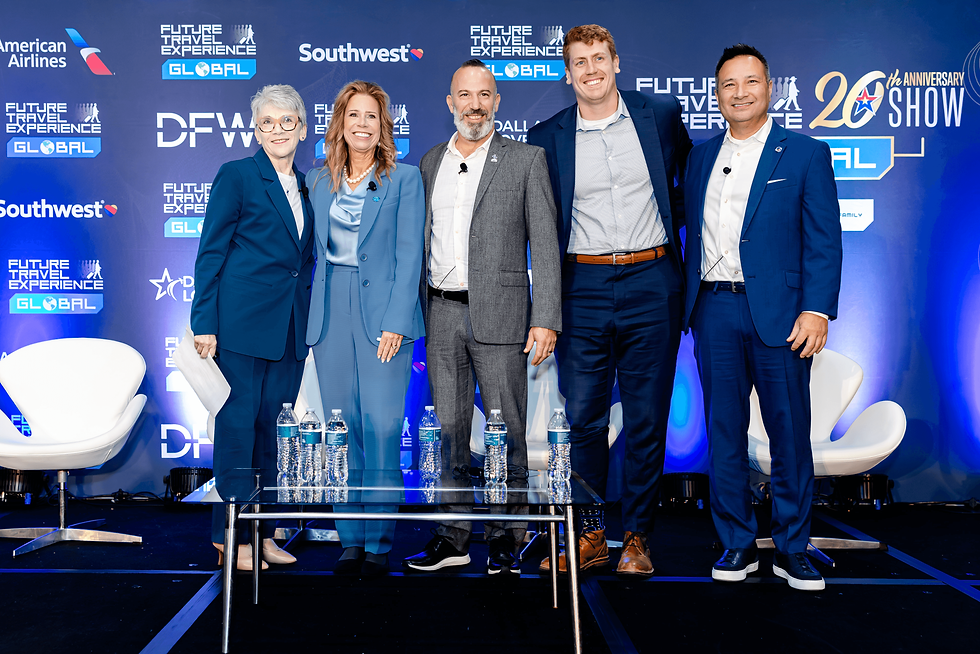
As Ian Birnbaum, Project Manager at Burns Engineering, explained when discussing the project at FTE Global:
“Burbank proved that it doesn’t break the bank. We ended up beating the budget that we had … by more than 70%. We saved by going down this road.”
The savings gave the project team room to do more with the same investment. That allowed them to expand digital communication throughout the terminal, connecting operational information, wayfinding, airport content, and creative programming through Synect’s Passenger360® DCMS.
By re-evaluating their approach to displays, BUR and Burns were able to reduce costs and reinvest the savings in enhanced post-security LED displays without disrupting the project schedule.
One Journey Connected by Content
Passengers won't remember how many displays they saw. They'll remember how the airport made them feel.
Content must be designed around passengers' evolving needs to remain helpful and effective. From check-in through baggage claim, Hollywood Burbank Airport's new terminal digital signage is designed to meet those needs.
The Synect’s contributions to the BUR system begins at check-in, with two massive 17920×720-pixel LED video walls. The video walls combine airline identity and counter information, giving BUR the flexibility to adjust content as counter assignments change. Integrations with flight schedules and airport systems will allow digital branding to transition automatically in the future, based on flight schedules and counter allocations.

At security, four screens feature helpful content from Synect's Better, Faster Security Checkpoints content library. The TSA-vetted program helps passengers prepare for screening and divestment, streamlining their checkpoint experience, decreasing perceived waits, and enhancing checkpoint efficiency.
Just after security, the BUR Board becomes the terminal's signature communication moment. It functions as a central source of information: flight data and wayfinding are the stars of the display, supplemented by terminal amenities, weather, localized content, animated aircraft, and Hollywood searchlights.
The BUR board delivers practical information while establishing a sense of place. It answers three fundamental passenger questions: Where am I now? Where do I need to go next? What can I do while I wait?
From there, FIDS throughout the terminal provide arrival and departure updates, while 14 gate displays bring flight and boarding information directly to departing passengers. On arrival, baggage information displays guide travelers to their luggage.
Passenger360, Synect's DCMS, connects these touchpoints by coordinating operational information and creative content across the terminal.
Connected Experiences Require Connected Content
Displays alone don't create a connected passenger experience. Content strategy, creative, technology, and placement must work together.
BUR’s content strategy began with defining what passengers need at each location. That strategy informs which displays are used, where they’re placed, what information they carry, and the content used to make it engaging and distinctive.

Working from Anyone Collective's designs, Synect's Orlando-based studio developed animation and dynamic content that can respond to airport operations. Flight data can change in real time. Airline branding can automatically change at gates. Amenity information can share space with operational messaging. Motion and localized creative add personality without competing with essential information.
The result is a consistent visual experience with a different purpose at every step:
Check-in: Find the right airline and counter.
Security: Prepare for screening and divestment.
Post-security: Get oriented and understand what's available in the new terminal.
Gate: Receive the information needed to board.
Baggage claim: Find luggage and complete the journey.
Monument Sign: In the future, displays will extend BUR's communication and identity into the outdoor parking environment.
Each display has a specific job, but Passenger360 and a unified content strategy allow them to work as one system. That coordination is what turns a collection of screens into a cohesive passenger experience.
Testing the New Experience
Before opening the terminal for full operations, BUR put the new passenger experience to the test. In September, 1,500 volunteers moved through the terminal in a full-scale operational trial, traveling from parking and check-in through security, gates, and baggage claim. Early reactions captured the transformation simply. One volunteer told ABC7 the new terminal was “bigger and brighter and newer.”
The broader response was equally positive. The Los Angeles Times reported that 98% of feedback from the trial was positive. One volunteer told ABC7 the new terminal was “bigger and brighter and newer.” See the video here.
Hollywood Burbank Airport's New Terminal Digital Signage is Designed to Evolve
As operations evolve, the terminal will change. BUR's passenger communication system is built to change with it. Passenger360 gives BUR a foundation that can support new content, displays, applications, and communication needs over time without treating every new requirement as an isolated project.
For Montee Fiely, Synect’s Head of Strategic Engagement, that is one of the most important lessons from BUR.
“The opportunity at Burbank wasn’t simply to replace static signs with digital ones. It was to rethink what those displays could do for passengers and operations. By starting with content strategy, BUR turned a traditional FIDS scope into a connected communication experience, while finding savings that could be reinvested into the terminal. That’s the bigger lesson for airports: when you plan the content, technology, and infrastructure together, every display can work harder and the investment can deliver more over time.”
For Hollywood Burbank Airport, today marks the culmination of a once-in-a-century terminal project, and the start of a new passenger experience. For the communication system driving that experience, it's a foundation to keep building on.
To learn how Synect can help you build a new communication foundation, get in touch with our team.