
MUST READ: Airport Improvement Spotlights New National Checkpoint Rollout for America's 250th

A new feature from Airport Improvement's Paul Nolan takes readers behind the scenes of the initiative that enhanced checkpoint experiences for millions of travelers this summer. As summer travel winds down and airports examine what had the greatest impact on their passenger experiences, we’re diving deep into the ways content and digital communication can build better experiences at security, where passenger anxiety historically spikes.

Read the full article to learn more about the initiative and the team that made security communication more useful, engaging, and enjoyable for passengers.
Here’s a preview of what the article explores.
Celebratory Content That Helps Passengers Move Forward
Checkpoints work better when passengers know what to do, where to go, and what to expect.

For the checkpoint enhancement initiative, Synect created content that balances practical checkpoint guidance with storytelling celebrating America's anniversary. Passengers encounter screening instructions, patriotic messages, historical facts, and other custom creative.
By interspersing helpful and creative content, the program captures and holds passenger attention. Motion draws passengers’ eyes to helpful content, ensuring they receive tips to help them prepare for screening. Engaging content gives passengers something to do in the queue, which makes wait times feel shorter.
As Greater Orlando Aviation Authority (GOAA) CEO Lance Lyttle explains in the article, targeted, real-time information can provide a smoother journey and answer questions passengers may have before they reach screening.
A National Rollout Designed Around Airport Realities
Creating a consistent experience across the country required a skilled team.
Security checkpoints are dynamic, active environments, and each airport had different needs and requirements for placement, permitting, networking, power, connectivity, and passenger flow.
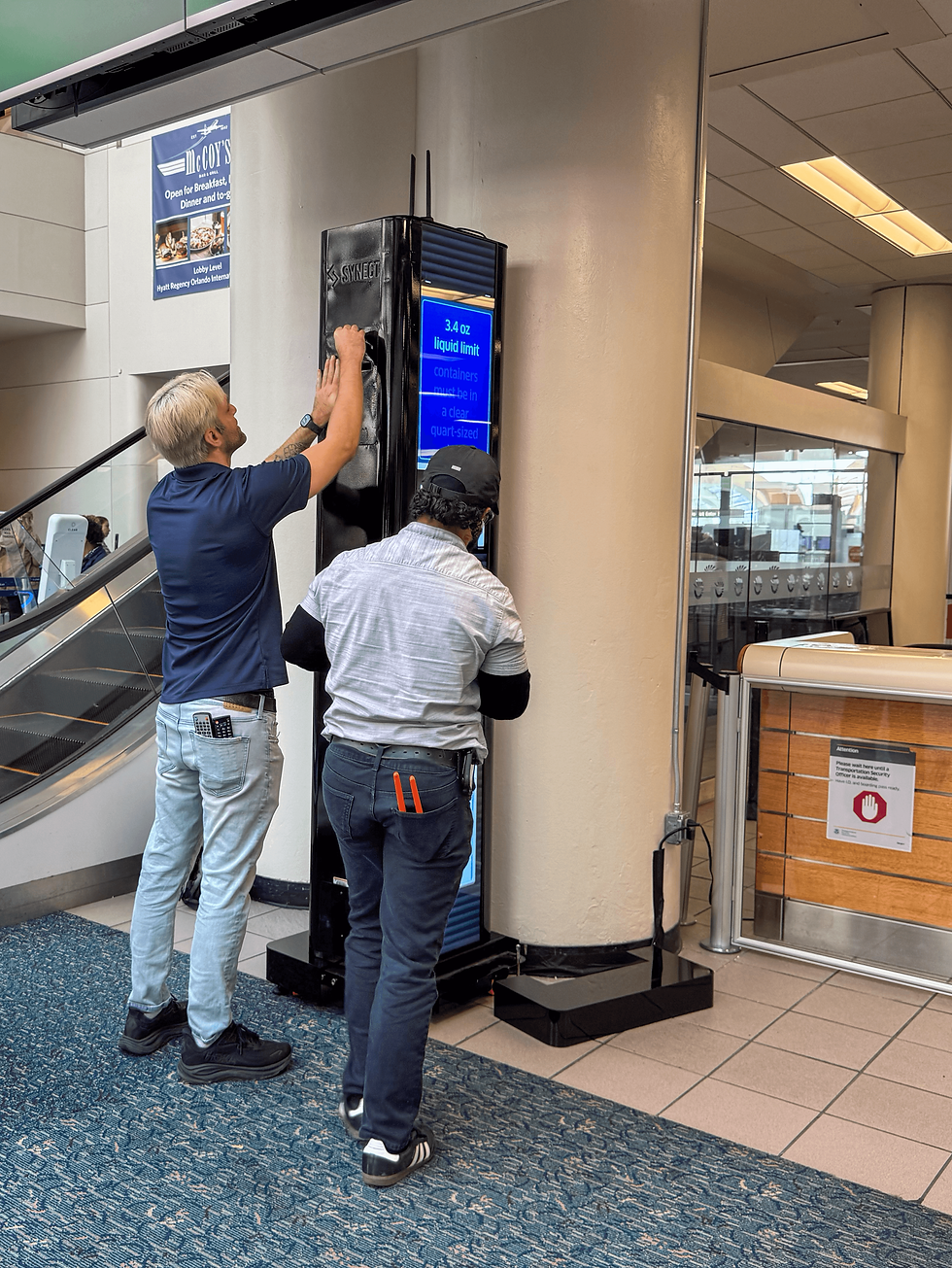
Synect worked alongside K2 Security Screening Group, Faith Group, Saefix, TSA, and individual airport teams to make the rollout possible. The project was part of the checkpoint enhancement initiative for the Freedom 250, LLC event produced by Event Strategies Inc.
Faith Group supported engineering, infrastructure, site inspections, and permitting. Saefix configured wireless connectivity. K2 coordinated deployment and installation, with the team's preparation and ReadySeeGo Vision's turnkey design helping most installations take just two to three days. Synect led content creation and provides training and ongoing remote support.
The result demonstrates that airport modernization works better when strategy, content, platforms, implementation, and support are planned for and aligned from the beginning.
Communication Created to Evolve
While this program was implemented to celebrate the country's anniversary, it was designed to support airports for every major event to come.

As airports prepare for continued passenger growth and a mega-decade of major events, communication has to evolve alongside facilities, technology, and operations.
Airport Improvement's new feature offers a closer look at how it's already happening inside the checkpoint. Read it today.


