
3 Digital Signage Content Strategy Questions Answered by Our Team Before InfoComm

Content drives change. But all too often, organizations treat digital signage as the solution. They invest heavily in new displays and installations and treat content as an afterthought. The end result is bad design and bad signs, as Faith Varwig, founder and Managing Principal of Faith Group, said during our 2024 FTE Global panel.
Synect hates bad content. We hate to see signage wasted. And we know AV experts and enthusiasts do, too.
That’s one reason we can’t wait to join InfoComm 2026 in Las Vegas this month. Synect’s CEO, Yahav Ran, will speak during “Designing for Impact: How Purpose Driven Content Transforms Digital Signage," on Tuesday, June 17, at 9:30 a.m. Pacific Time.

He’ll join the following industry leaders to discuss how strategy changes signage:
Laila Hede Jensen, CEO & Business Transformation Leader, Zenova
Dawn Simonds Ramirez, VP, Content, PatientPoint Government
Jim Nista, Creative Director, Motv Experiential
Stu Siegal, Creative Practice Director, AVI-SPL
Together, they’ll explore why content needs to be built with purpose to make the greatest impact and what organizations can do to make their digital displays more effective.
Ahead of the conference, we sat down with Yahav, Montee Fiely, our Head of Strategic Engagement, and Gina Marie Paquette, our Director of Business Development, to discuss some of today’s biggest digital signage content strategy questions.
Read on for their responses.
How does content strategy change the impact of digital signage?
Every inch of cable, every network capability, every screen, and every piece of hardware exists for one reason: to display content. Without strategy, all of it goes to waste. When content is inconsistent, doesn’t connect with viewers, or fails to inspire action, its impact is limited. Screens become a source of visual noise.
Content strategy helps organizations make the most of every display. It turns digital signage from a series of displays into a connected, coordinated communication system.
As Yahav told our team:
“Great digital signage starts with content strategy. Asking what you need viewers to know, where they’ll see the content, and what they need to do changes everything from creative direction to placement to content timing.”
Starting with strategy is essential for creating effective content. When content is created to fill screens, it’s likely to be passive messaging. As we’ve discussed in the past, passive messaging assumes viewers will notice content and respond to it. It’s rarely effective. In contrast, active messaging earns attention, relates to the viewer’s needs, and uses that engagement to influence behavior.
Understanding that distinction is critical for environments where people are on the move and making quick decisions. As Synect’s Better, Faster Checkpoints program has proven, great content can help people understand their surroundings and prepare to take the next step with confidence.
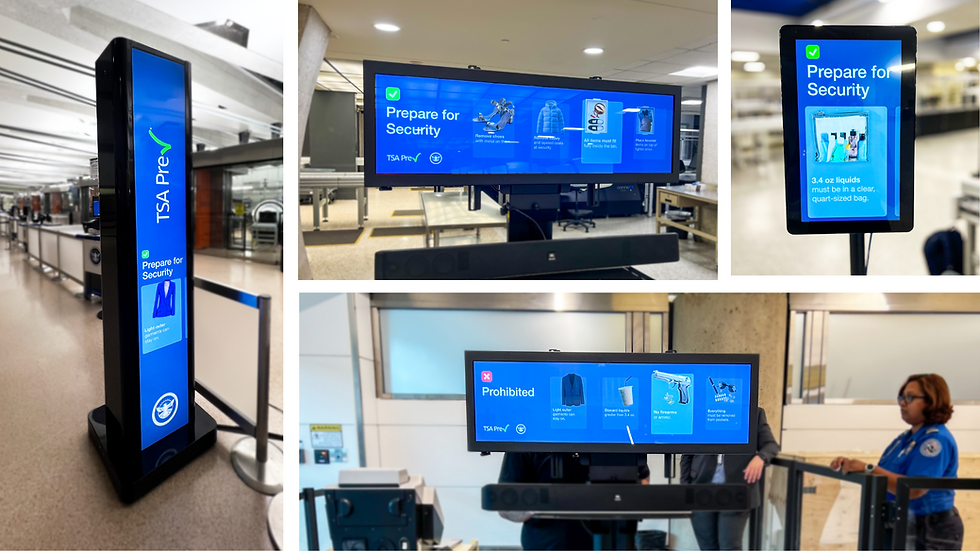
When content strategy is done well, digital signage can reduce confusion, improve foot traffic flows, support staff, drive engagement, and create more memorable experiences.
What are the most common content strategy challenges?
Starting with content can challenge existing processes, but it’s the right way to do things.
As Gina Marie told our team:
“People often expect to invest in screens, software, and infrastructure first. They install it all and then figure out what content to put up. That ends up making things slower and more expensive. When you start with content strategy, you can build exactly what you need to achieve your goals.”
When content discussions take place at the end of a project, important decisions about display types, layouts, and infrastructure have already been made. Those decisions can unintentionally limit what the system is capable of doing.
Starting with strategy gives organizations more options. Understanding the audience and environment is critical for creating a strong strategy.

Before creating content, teams should ask questions like:
What is happening around the display?
What questions will viewers have in that moment?
How are people likely to feel when they see the screen? Relaxed? Rushed? Excited?
How should the content make them feel?
What other messages are competing for their attention?
Answering these questions helps organizations create content that’s relevant, timely, and useful.
Useful content is effective content. Digital signage works best when messaging is focused. When too many messages compete for viewers’ attention, they’re likely to ignore all of them.

The most effective content strategies prioritize clarity. They identify the most important message for a specific audience in a specific moment and deliver it in a way that’s easy to understand and act on.
What digital signage content strategy questions should organizations ask potential vendors?
When considering a new vendor or partner, organizations should ask digital signage content strategy questions such as:
How will you support us as we define our audience's needs?
How do you decide where content is placed and when it should appear?
Who is creating the content?
How is content funded and sustained?
Can your content and systems adapt to real-time conditions?
How will the system support different teams and departments?
What metrics can help us measure success?
How can you help us scale our content and strategies as our needs change?
According to Montee:
“The right partner should be able to talk about more than hardware, software, and file formats. They should be able to explain how content can enhance viewers’ experiences and support organizational goals.”
They should be ready to support the content and system immediately after launch. Support plans should be detailed and effective. If the plan is only to ensure the screens go live in time, it isn’t robust enough to support your organization.
Great digital signage content partners will ask questions, too. They’ll want to understand audience behavior, audience profiles, environmental context, operational challenges, brand goals, and long-term plans. That curiosity means that they’re designing content for the people who will engage with it rather than simply filling a screen.
Meet Synect at InfoComm 2026
We can’t wait to join the excitement in Las Vegas and connect with the people shaping the future of digital signage, experiential media, and visual communication.

If you’ll be in Las Vegas, schedule time to meet with our team. You can find us on the show floor or in Room W231 on Tuesday, June 17 at 9:30 a.m. Pacific Time during Yahav’s panel, “Designing for Impact: How Purpose Driven Content Transforms Digital Signage.”
We can’t wait to connect with you during the show. Bring your biggest digital signage content strategy questions, your trickiest communication challenges, or the display network you know could do more, and we’ll be happy to talk it through with you.

