How Airports Can Increase Checkpoint Throughput

Passenger demand continues to grow, but airport checkpoints can't always grow with it. Space is limited. So is staffing. Infrastructure updates require significant time and capital.
So how can airports move more passengers through the checkpoints they already have?
Our panel at FTE Global 2026 explored how airports can make the most of their existing space and facilities. In "The Checkpoint Has Changed: Horizon 25, Public-Private Partnerships and the Future of Airport Security," leaders from airports, airlines, screening technology, operations, and passenger communication came together to share their thoughts on the future of security operations.
Here's what you need to know.

Airports Must Make the Most of Existing Spaces
Building bigger checkpoints is not always a realistic solution.
Delta Air Lines’ Jason Hausner framed the challenge simply: demand is growing, but space and staffing aren't. That leaves airports with a clear imperative:

“We need to get more out of what we have today. So the lanes that we have today, the technology that's deployed today, and that's being deployed, we need to get more out of that.”
That can include improving the performance of existing screening systems through software and AI. Analogic’s LeeAnn Levesque noted that current CT technology is not yet being used to its full potential, describing AI algorithms as one path toward greater capacity and throughput.
It can also mean using information differently. Real-time wait times, operational data, and better passenger guidance can help airports distribute demand and make better use of available lanes.
Before planning costly checkpoint expansions, airports should evaluate how technology, data, and operational changes can help increase throughput of their existing facilities.
Proven Technology Must Scale Faster
Innovation only changes the system when proven solutions move beyond pilots and into broader deployment. Pilots are an important part of evaluating new technology, as Hausner pointed out, but he's right to caution our industry against letting successful tests remain isolated:
“Having a pilot in one airport is great, testing new technology in maybe 3 or 4 airports is also great, but being able to scale that, and scale it quickly, is really what needs to happen.”
That requires a stronger connection between testing and deployment. Evaluation criteria, measurement, certification, funding, and scale plans should be considered from the beginning rather than after a pilot succeeds.
As several of our panelists said, shortening certification timelines in bringing innovative technologies to full deployment more quickly. Hausner suggested that additional testing resources could help accelerate evaluations and bring new technologies into operation sooner. Levesque praised TSA's work to harmonize certification requirements, highlighting it as a key path in reducing the time and expense required to deploy new tools.
A successful pilot needs more than promising results. It needs a clear path through evaluation, approval, and deployment to ensure its benefits reach enough passengers to make a meaningful impact.
Communication Is Checkpoint Infrastructure
Screening equipment isn't the only way to increase checkpoint throughput.
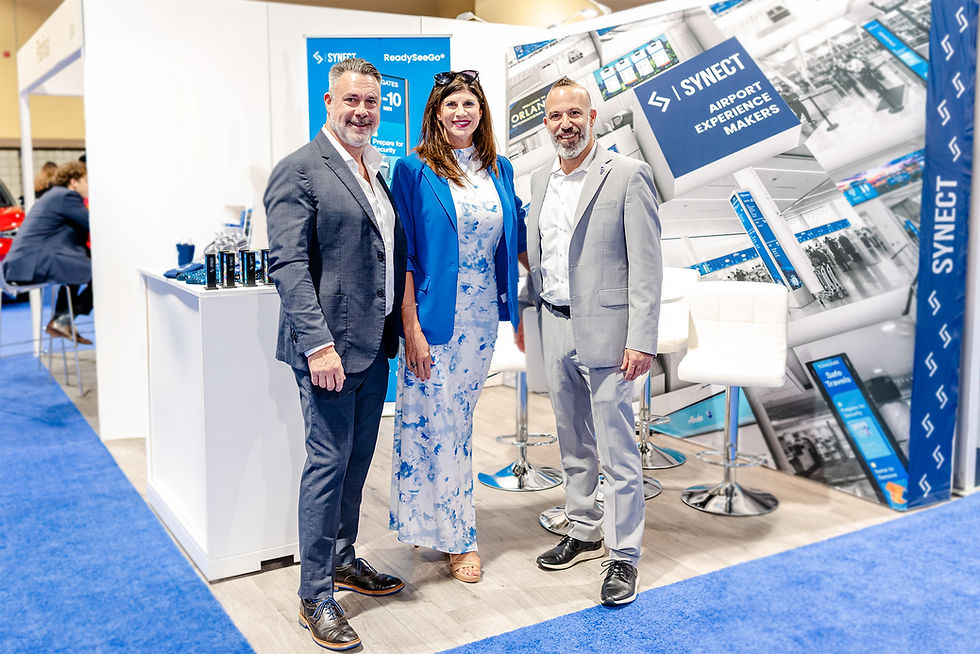
Synect CEO Yahav Ran focused on the cumulative effect that lost time has on passengers and checkpoint throughput. Multiply a few moments of hesitation across thousands of travelers, and the operational impact becomes significant.
That's why effective communication is a core component of checkpoint infrastructure. As Ran said during the panel:
“An educated passenger is a prepared passenger, and a prepared passenger is one of the best throughput tools that we have today.”
Digital communication can prepare passengers before divestment, reduce repetitive instructions for employees, and adapt as airport conditions change. Messaging can be prepared for normal operations, peak travel, major events, or emergencies and deployed when needed.

This helps everyday operations and major surges. As part of the work to support America's mega decade of events and 250th anniversary, Synect worked with K2 Security Screening Group Inc., Faith Group, and Saefix to enable 39 installations across 12 major U.S. airports in 6 weeks with 0 checkpoint closures.
This project was completed as part of the Freedom 250, LLC event produced by Event Strategies Inc.
As Lance Lyttle, CEO of the Greater Orlando Aviation Authority said in Airport Improvement's article on the launch:
“Installing the monitors is effective for directing passengers and is simply a nice customer experience touch."
When passengers understand what to do and where to go, they move more quickly and with more confidence. Lines move faster and throughput increases. Better information creates better experiences.
Passenger communication should be planned alongside screening technology, staffing, and facilities, not treated as an afterthought.
New Partnership Models Can Remove Bottlenecks and Increase Checkpoint Throughput
Helpful technology is much less helpful when it's difficult to fund, certify, staff, or deploy.
As VMD’s Trey Huelskamp highlighted during the panel, airport security modernization faces significant challenges. TSA is responsible for screening equipment across approximately 450 airports, but limited budgets make it difficult to modernize every checkpoint quickly. Airports often have little visibility into when new equipment will arrive. Programs that allow airports and airlines to fund equipment directly can require substantial upfront investment.
TSA is exploring new ways to address these challenges. Shortly before FTE began, they announced the new Horizon 25 strategy, which prioritizes checkpoint modernization, passenger experiences, and "multi-modal transportation security." The agency also announced the end of Gold+ and the start of an evolved Screening Partnership Program (SPP), which promises expanded opportunities for collaboration in the checkpoint.

As Huelskamp noted, these efforts open the door to more flexible screening arrangements:
"I think there's also opportunity to start using SPP within an RSSP model. This would allow an airport to engage an SPP vendor without having to completely opt into the program."
He pointed to off-site screening initiatives, including Massport's efforts in Boston, as examples of how airports could rethink where and how passengers are processed. With physical checkpoint space becoming increasingly limited, hybrid approaches could help airports accommodate growing passenger volumes while allowing TSA to concentrate more resources on security standards, certification, and oversight.
Huelskamp also highlighted how private screening contracts can align operational incentives with performance measures, including wait times and staffing. Looking ahead, he sees opportunities for more integrated technology and open architecture that would give checkpoint operators better access to real-time information and greater flexibility in managing their operations.
For airports, the opportunity is to find new ways to bring proven technology into service without relying exclusively on traditional funding and deployment models. The right partnerships could help modernize existing checkpoints, make better use of available capacity, and create a more manageable path for future growth.
What Should Airports Do Next?
My perspective is straightforward: successful checkpoint modernization isn't about adding lanes or a big piece of new technology. It's about increasing throughput with the coordinated use of communication, screening technology, data, operations, and partnerships.
To move forward, airports need to create a practical agenda for checkpoint modernization:
Treat passenger communication as part of checkpoint operations.
Establish shared baselines and best practices for checkpoint performance.
Expand the value and adoption of programs like TSA PreCheck.
Connect pilots to clear measurement, certification, funding, and scale plans.
Explore partnership and operating models that can add flexibility and capacity.
The checkpoint has changed. The opportunity now is to make every part of it work better together.
Synect’s solutions are supporting better checkpoint experiences in 17 airports across the country, with more coming soon. Planning your next checkpoint modernization or passenger communication program? Talk to me about your top priorities and what's coming next.

Gina Marie Paquette is Synect's Director of Business Development, working with airports, industry leaders, and strategic partners to modernize airport operations and passenger communication. She helps advance Synect's content-first approach to digital signage, connecting innovative technology with practical solutions that improve passenger experiences and airport operations.